
· by Michael Blair, Nashville's HVAC
One room that never matches the rest of the house is often a duct, airflow or envelope problem rather than an equipment problem. The Department of Energy’s HVAC renovation guide for homeowners says comfort complaints can often be fixed by clearing blocked registers, freeing stuck dampers, repairing disconnected or damaged ducts, or replacing grilles that do not direct the air well. So we start with the duct serving that room and the walls and roof around it, and leave the equipment for last.
Why is a room over the garage always hotter?
A room over a garage sits on top of space nobody heats or cools, and it often has more exterior wall and roof around it than a bedroom in the middle of the house. It is also often near the end of a long duct run, with a lot of attic for the air to cross before it gets there.
So it can pick up more heat and receive less air than the rooms around it, and turning the thermostat down changes neither. The same DOE guide says the only way to know whether you have a blocked or disconnected duct, big air leaks or too little airflow is to test the ducts for leakage and airflow. That testing, rather than a look and a guess, is where our ductwork and air quality work begins.
What to check before spending
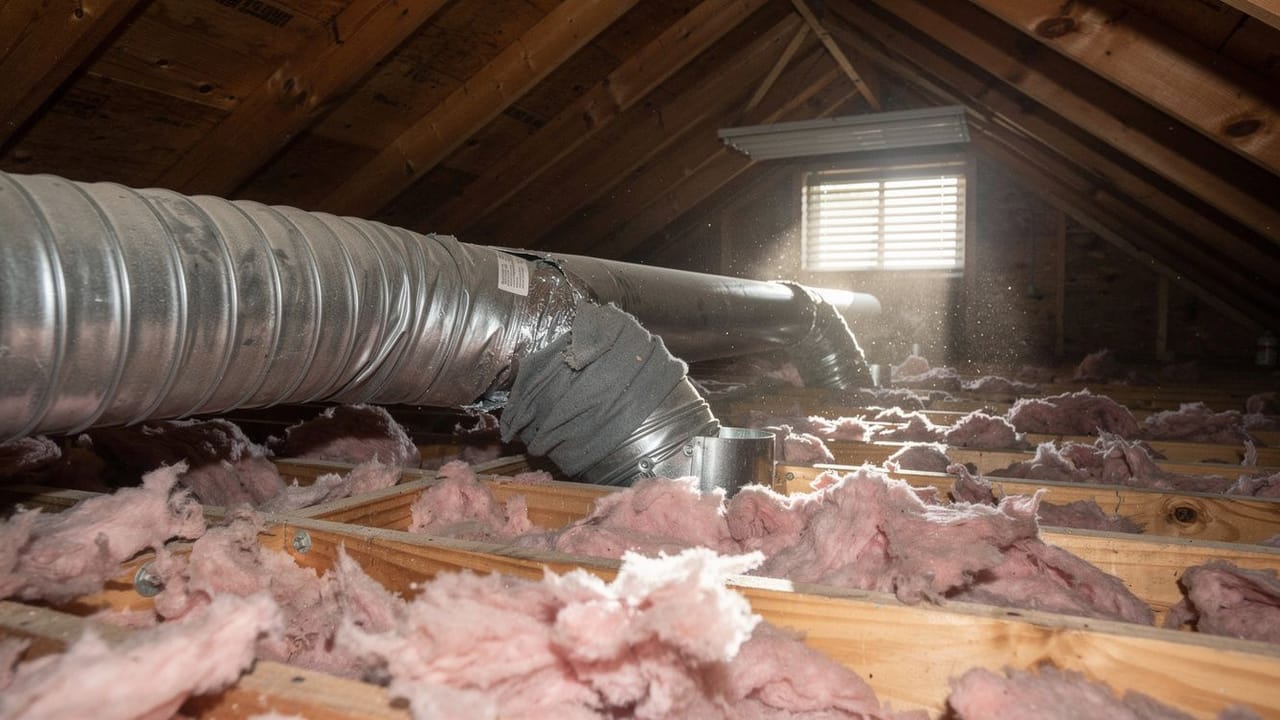
Confirm air is actually arriving. With the system running, hold the back of your hand at the register, then do the same in a room that stays comfortable; a faint stream against a steady one tells you a lot before anyone climbs into the attic. The Department of Energy’s guide to improving the efficiency of your duct system lists the faults to look for up there: duct sections meant to be joined that have fallen apart, and flexible duct torn during installation or afterward. DOE’s home heating and cooling fact sheet adds crushed or badly connected ductwork, which it says can restrict flow so that the cooled or warmed air never reaches the room it was meant for.
Then look at the return. The duct guide walks through a room with a supply register, no return and the door shut: the supply pushes that room to a relatively high pressure, its air leaks out of the house, and outside air leaks into the room that has the return, adding load to the system. Its fix is an opening covered by a louvered grille in the door or the adjoining wall, and the 2011 renovation guide adds jump ducts and transfer grilles between closed rooms and common spaces.
- Check supply flow at the register with the system running
- Confirm the room has a return, or a way for air to get back out with the door shut
- Look in the attic for crushed, kinked, torn or disconnected flex duct
- Look at the insulation over that room and compare it with the rest of the attic
- Verify dampers in the trunk are open
Balancing, and its limits
Balancing moves air around rather than making more of it. Dampers in the branch ducts can send a larger share to the hot room, but they need setting against measurements, and DOE’s renovation guide notes that dampers installed in the ducts affect both the efficiency and the balance of the system. That makes it a job for someone measuring the flow at each register, with adjustments made from the numbers.
Shutting registers in the cooler rooms is the do-it-yourself version, and it has a ceiling. Lawrence Berkeley National Laboratory’s study of register closing found that closing more than 60 percent of the registers restricts airflow so severely that a furnace can end up running on its high-limit switch and a cooling coil can freeze, and that closing registers near the air handler raises pressure and leakage across the whole system. That study modeled California houses with the ducts outside the conditioned space, the same arrangement as ducts in an attic. Starved airflow is also the first thing to rule out in our post on why an air conditioner freezes up.
When does a hot room need its own system?
Where the room needs more air than its duct can deliver, a ductless mini-split serving that room is worth pricing. DOE’s 2011 guide describes these as an outdoor unit connected to wall- or ceiling-mounted indoor units that give zoned heating and cooling without ducts, lists them among the options for additions, and points out that because the indoor unit sits inside the conditioned space it avoids the losses of leaky ducts in an unconditioned attic. It is not automatically the cheaper route, though. The guide makes the cost argument for ductless when a whole leaky duct system would otherwise be replaced, which is a bigger job than one bad run, so ask for a price on the mini-split and on the duct repair side by side.
A separate unit also fixes the timing. A bonus room is often used at different hours from the rest of the house, and DOE notes that ductless indoor units can be turned off in rooms that are not in use, so the room can run on its own schedule. If you want the duct tested and both options priced, ask us for a free written estimate.
Sources
- U.S. Department of Energy, Energy Renovations: HVAC, A Guide for Contractors to Share with Homeowners (2011) — Comfort complaints often fixed at blocked registers, stuck dampers, disconnected or damaged ducts and poor grilles; duct leakage and airflow tests the only way to know; jump ducts and transfer grilles; dampers affect efficiency and balance; closing vents not recommended; oversized units shut off before removing moisture, less so with variable-speed equipment; ductless heat pumps give zoned heating and cooling, avoid attic duct losses, can be turned off in unused rooms, suit additions; cost of replacing a leaky duct system may justify ductless
- U.S. Department of Energy, Improving the Efficiency of Your Duct System — Duct sections fallen apart and flex duct torn during or after installation; a closed room with a supply and no return is pressurized, air leaks out and outside air leaks in elsewhere; a louvered grille in the door or adjoining wall avoids it
- U.S. Department of Energy Energy Saver, Home Heating and Cooling — Crushed or improperly connected ductwork restricts flow so conditioned air never reaches its destination; oversized cooling systems give inadequate comfort and can lead to mold
- Lawrence Berkeley National Laboratory, I. S. Walker, Register Closing Effects on Forced Air Heating System Performance (2003) — Closing registers increased energy use in modeled California houses with ducts outside conditioned space; closing those near the air handler raises pressure and leakage system-wide; closing more than 60 percent risks high-limit furnace operation and frozen cooling coils
FAQ
Why One Room Is Always Hotter Than the Rest — questions
Should I close vents in unused rooms?
We would not make a habit of it. DOE’s 2011 renovation guide recommends against it, because shutting vents can reduce airflow through the air handler, create pressure imbalances and stress the duct connections. A Lawrence Berkeley National Laboratory study found that closing registers increased energy use in the California houses it modeled, and that closing more than 60 percent of them can freeze a cooling coil. Leave them open and fix the room that is actually wrong.
Will a bigger AC fix a hot room?
Usually not, and it can make the rest of the house worse. DOE’s 2011 guide explains that an oversized air conditioner drops the air below the set point quickly and shuts off before it has removed the moisture, which is a problem where summers are humid, and its home heating and cooling fact sheet ties oversized systems to poor comfort and mold. A hot room is often a distribution problem, and more capacity at the air handler does not change how much air reaches the end of a long duct. DOE adds one caveat: variable-speed equipment can slow down when demand is low, so oversizing matters less with it.
Is a mini-split worth it for one room?
Often, especially for an addition or a room at the end of a long duct run, and DOE lists ductless units among the options for additions. It can run on its own schedule and be switched off when the room is empty. It is not automatically cheaper, though: a duct that only needs reconnecting, sealing or a return path may cost less to put right, so have the duct tested and price both before deciding.
How do you balance airflow between rooms?
With dampers in the branch ducts, set from the airflow measured at each register, so a hot room gets a bigger share. Balancing only redistributes air; it makes no more of it, and the dampers affect the system’s efficiency as well as its balance. Closing registers in cooler rooms is the rough version, and it has firm limits.