
· by Michael Blair, Nashville's HVAC
Air conditioning does two jobs: it lowers temperature and it removes moisture. The Department of Energy’s Building America guide Why Right-Size? points out that in most homes the central cooling system is the only thing dehumidifying, unless a separate dehumidifier has been added, and that occupants react more adversely to humidity than to temperature. Where summers are as humid as ours, the moisture half of the job matters as much as the cooling half, and oversized equipment is a common reason it falls short.
Why oversized equipment makes it worse
Moisture is removed when humid air spends time against a cold coil. The same guide explains that a right-sized system runs long enough for water to condense on the evaporator coil and drain away, while an oversized one satisfies the thermostat quickly and stops before the condensate has drained off. Building Science Corporation’s humidity control presentation for Building America sums it up in a line: conventional oversizing causes short-cycling and less moisture removal.
The result is a house that reaches 72 and still feels damp, with short, frequent cycles. Why Right-Size? says many contractors still size equipment by square-foot rules of thumb, and that by that method even new code-built homes would likely come out oversized. Size is not the only thing that makes a system cycle short, though, and our post on why systems short cycle walks through the other causes to rule out first.
What indoor humidity should you aim for?
The EPA’s brief guide to mold, moisture and your home advises keeping indoor relative humidity below 60 percent, ideally between 30 and 50. Why Right-Size? makes the same connection from the equipment side: lower humidity keeps a house below the range where mold and mildew become an issue. The Building Science Corporation slides set their indoor design targets by season, 50 percent in summer and 35 in winter.
A hygrometer settles the argument. The EPA describes it as a small, inexpensive instrument, $10 to $50 at many hardware stores, and adds that condensation collecting on windows, walls or pipes can be a sign of high humidity. Some houses read above 60 percent in July with the air conditioning running, and a number like that is the one to act on.
What fixes a house that feels clammy?
Sizing comes first. Why Right-Size? says a bid should require Manual J and S calculations before any equipment is bought, which is why every system replacement we quote starts with a load calculation. After that, a variable-speed or two-stage system runs longer at lower output, which is what dehumidification needs, and the guide notes that a variable-speed air handler can improve a system’s ability to dehumidify.
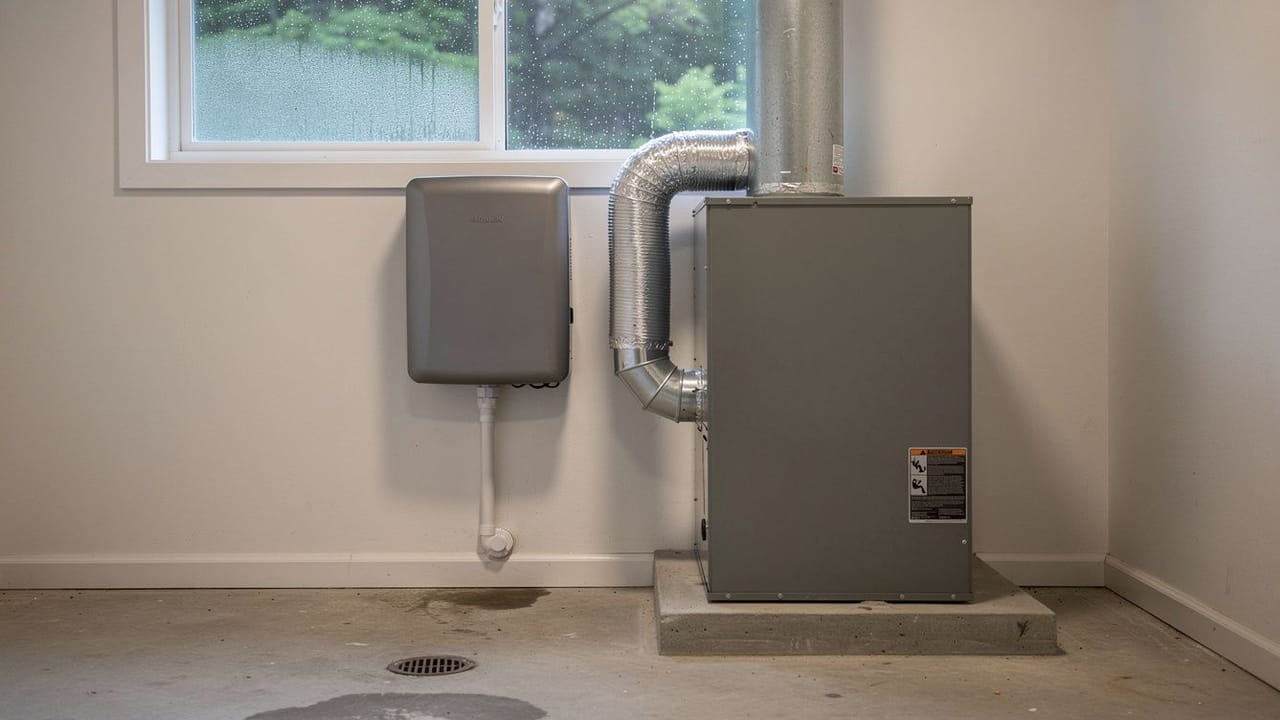
A whole-house dehumidifier tied into the return handles moisture whether or not the house needs cooling. The Building Science Corporation slides say there will always be times of year with little cooling load to call the thermostat while humidity stays high, and in the Texas, Oklahoma and Florida homes they studied, high indoor humidity turned up mostly in the spring and fall swing seasons, rainy periods and summer nights. ENERGY STAR’s dehumidifier page says a certified whole-home unit may be the right choice if you live in a humid climate and have central air.
The fan setting costs nothing to change. In tests at the Florida Solar Energy Center on fan cycling and indoor humidity, net moisture removal dropped significantly when the fan ran continuously, and indoor humidity was higher with the fan on than on auto. Those tests date from 1987 and covered two units, but Why Right-Size? describes the same thing: water left on the coil evaporates back into the airstream while the fan keeps blowing after a cooling cycle.
- Set the thermostat fan to auto, not on
- Have the crawl space vents and the case for sealing them looked at
- Run the bathroom fan while showering and the range hood while cooking, vented to the outside
- Keep the condensate pan clean and the drain line flowing, as the EPA also advises
- Consider a whole-house dehumidifier for spring and fall
The crawl space connection
If your house sits over a vented crawl space, summer air is coming in through those vents. They were meant to let fresh air push damp air out the other side, but the Department of Energy’s article on unvented, conditioned crawlspaces explains that in humid climates the outside air is often more moist than the air already in the crawl space, which leads to structural, mold and pest problems.
Closing and conditioning the crawl space goes after the source. DOE reports that unvented, conditioned crawlspaces used 15 to 18 percent less energy for heating and cooling while reducing humidity by over 20 percent. When a house reads high on the hygrometer and has vents in its foundation walls, we look under the floor before we talk about new equipment, and you can book a free written estimate to have both checked on one visit.
Sources
- U.S. Department of Energy, Building America, Why Right-Size? Science versus Practicality (2009) — Cooling system the sole dehumidifier in most homes; occupants react more to humidity than temperature; right-sized systems run long enough to drain condensate, oversized ones do not; rule-of-thumb sizing oversizes even new homes; Manual J and S before purchase; variable-speed air handler improves dehumidification; coil moisture re-evaporates while the fan runs; lower humidity keeps mold and mildew in check
- Building Science Corporation for DOE Building America, Humidity Control Strategies (2010) — Oversizing causes short-cycling and less moisture removal; seasonal indoor design targets of 50 percent summer and 35 percent winter; little cooling load while humidity stays high; high humidity mostly in swing seasons, rainy periods and summer nights in Texas, Oklahoma and Florida homes
- U.S. EPA, A Brief Guide to Mold, Moisture and Your Home — Indoor humidity below 60 percent, ideally 30 to 50; humidity meter $10 to $50; condensation as a sign of high humidity; bathroom and cooking exhaust; vent moisture to the outside; clean drip pans and drain lines
- ENERGY STAR, Dehumidifiers — Whole-home dehumidifier may be the right choice in a humid climate with central air; saves energy, improves comfort and prevents mildew when sized and installed properly; can be expensive; drains routed by an HVAC professional
- Swami and Ramanan, Florida Solar Energy Center, Another Aspect of Duty Cycling: Effects on Indoor Humidity (1987) — Net moisture removal reduced significantly with the fan on continuously; indoor humidity higher in fan on mode than auto
- U.S. Department of Energy, Unvented, Conditioned Crawlspaces: Building America Top Innovation — Outside air in humid climates often more moist than crawlspace air, causing structural, mold and pest problems; 15 to 18 percent less heating and cooling energy and humidity reduced over 20 percent
FAQ
Why Your House Feels Clammy at 72 Degrees — questions
Should the fan be on auto or on?
Auto, in a humid climate. With the fan running continuously, water that condensed on the coil during a cooling cycle evaporates back into the air once the compressor stops, undoing part of the dehumidification. Lab tests at the Florida Solar Energy Center measured higher indoor humidity with the fan on than on auto, so auto is the better setting for moisture removal in humid weather.
Will a bigger AC dry the house out faster?
The opposite. Larger equipment reaches the setpoint sooner and runs shorter cycles, so air spends less time against the cold coil and less moisture is removed. Correct sizing from a load calculation, and after that a variable-speed system that runs long and low, is what dries a house.
Is a whole-house dehumidifier worth it in Nashville?
It is worth a look in a house that still reads above 60 percent with the AC working properly, and for the spring and fall weeks when it is humid but too mild for the AC to run much. ENERGY STAR says a properly sized and installed whole-home unit can save energy, improve comfort and prevent mildew, and it also says these systems can be expensive. Most drain to a floor drain or a condensate pump, so installation is a job for an HVAC professional.
What causes high humidity in a house?
In summer the cooling system is usually the only thing taking moisture out, so anything that cuts its work short leaves the air damp: an oversized unit, or a fan left on that blows coil water back into the house. Humid outside air through crawl space vents, and showers and cooking without exhaust fans, add more.